Quick reference
| Field | Value |
|---|---|
| State / region | Oklahoma, southeastern Ouachita Mountains near Broken Bow |
| Species | Rainbow trout (dominant), occasional brown trout, smallmouth bass and sunfish in lower reaches |
| Best months | Fall through early spring; fishable year-round thanks to cold releases |
| Water type | Tailwater below Broken Bow Reservoir |
| Difficulty | Beginner-friendly in the park water, intermediate in the special-regulation Zone 2 |
| Wading | Wadeable at non-generation flows; slick rocks throughout, wading staff recommended in Zone 2 |
Why fish here
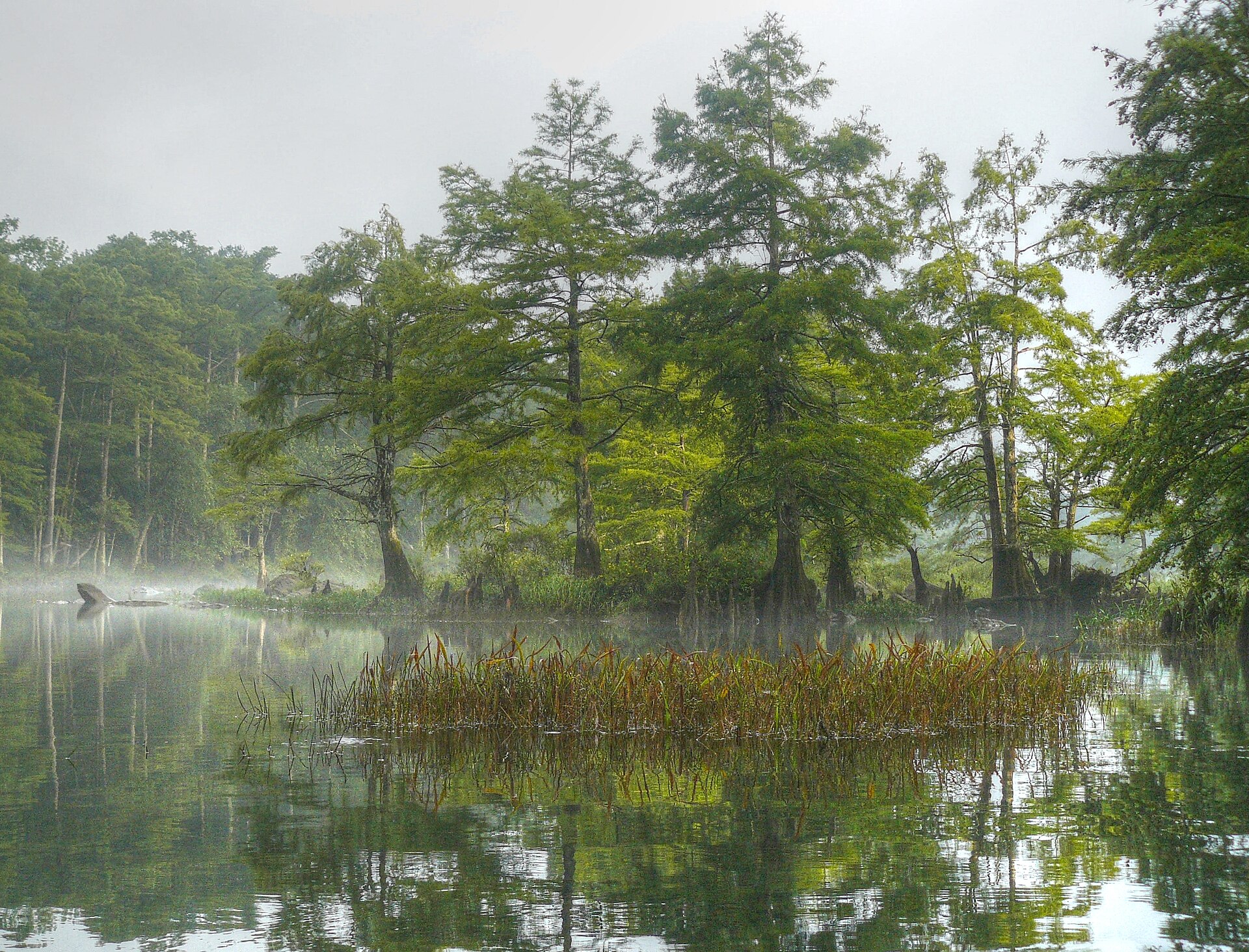
The Lower Mountain Fork is a cold tailwater below Broken Bow Reservoir with roughly 12 miles of designated trout water running from the spillway to the US Hwy 70 bridge — one of only two year-round trout fisheries in Oklahoma. It flows through and below Beavers Bend State Park, packing a surprising range of water into a short drive: a tight, creek-like tailrace, classic riffle-run-pool sequences in the park, and bigger, more open pools downstream.
The fishery runs on reliable stocking plus holdover fish, and the special-regulation reaches in the upper river give it real quality potential — larger fish that have survived a season or two under restrictive tackle rules. That structure lets anglers pick their experience: easy park water for beginners, more technical nymph and small-dry fishing in Zone 2, and less-pressured runs downstream for those willing to walk.
Geography is the other argument. Within a few hours of Dallas–Fort Worth, Little Rock, and Shreveport, this is the practical weekend trout trip for a large slice of the southern Plains — the water anglers fish when Colorado or Montana is out of reach, and a legitimately good fishery in its own right rather than a consolation prize.
The river, section by section
Spillway Creek / Zone 1 (Broken Bow Dam tailrace)
Access: Beavers Bend State Park near the Broken Bow Reservoir spillway, reached from SH 259A; park roads and day-use lots give walk-in access to the pools and runs immediately below the dam. Character: Fishes like a small, fast creek — pocket water, short riffles, and plunge pools hemmed in by trees and rock. Steep gradient, narrow channel, limited casting room. Species mix: Primarily stocked rainbows with holdovers that grow larger over time; browns are occasionally reported but rainbows dominate. Crowding: One of the most popular areas on the river — crowded on weekends, holidays, and through peak park season from late spring until school resumes. Cold-weather weekdays are much lighter. Notable hatches: Winter and early spring bring good midge and Blue-Winged Olive activity; March Browns show in late winter into spring, caddis are present much of the year, and egg patterns and attractors move freshly stocked fish.
Short, accurate casts and careful wading over slick rock define this reach. It rewards anglers who slow down and fish each distinct pool thoroughly rather than covering water. The critical habit here: check the generation schedule before stepping in, because flows can rise fast when the reservoir releases.
Zone 2 special-regulation trout area (upper main river)
Access: An almost four-mile special-regulation reach within and just below Beavers Bend State Park, reached from SH 259A and multiple park roads, day-use areas, and trails. Signed access points and parking make the riffles and pools easy to reach on foot. Character: Classic medium-sized trout water — riffle-run-pool sequences at moderate gradient, wider than Spillway Creek, with room for longer casts and indicator nymphing. Generally wadeable at non-generation flows; rocks stay slick and a staff helps. Species mix: Stocked rainbows at high density plus larger holdovers; special regulations are designed to maintain size structure over time. Crowding: Steady pressure given its reputation, but less congested than the spillway. Weekends and late spring through summer stay busy; winter and shoulder seasons offer more room. Notable hatches: Diverse bug life — small caddis and mayflies as staples, year-round midges supporting RS2-style emergers, and BWO and Sulphur-type hatches that create dry-fly windows when fish rise.
This is the river's best quality trout fishing and where a visiting angler should spend most of a trip. Artificial lures and flies with barbless hooks only, with more restrictive harvest rules — and the fishing reflects it. Nymph anglers do the bulk of the work with Pheasant Tails, Frenchies, Copper Johns, and Pat's Rubber Legs, switching to small emergers and dries when a hatch gets fish looking up.
Lower designated trout area (downstream to US Hwy 70 bridge)
Access: Road pullouts, bridge crossings, and informal walk-in spots outside the main park corridor, continuing to the US Hwy 70 bridge at the downstream limit of managed trout water. Character: Larger, more open water — deeper pools and wider runs with riffle sections between them. Gradient moderates, wading remains possible at normal flows, and some anglers fish from small boats where permitted. Species mix: Rainbows throughout, with densities thinning away from stocking points but a chance at larger, less-pressured fish. Warmwater species from the surrounding watershed appear in the farthest downstream reaches. Crowding: The lightest pressure on the river. Easy access points get busy on weekends and holidays; the more remote stretches stay quiet year-round. Notable hatches: Broadly mirrors the upstream zones — caddis, mayflies, and midges as the core diet, terrestrials in warm months.
The mix of open banks and wooded stretches suits longer casts and swinging streamers through the bigger pools. This is the reach for anglers who value solitude over fish density and are willing to trade some numbers for the shot at a better fish that sees fewer flies.
Hatches and seasons
| Months | Hatches | Flies |
|---|---|---|
| Jan–Feb | Baetis/BWOs, Light Cahill, assorted small mayflies, strong midges; winter caddis possible | Griffith's Gnat (18–22), BWO dries (18–22), adult caddis (16–18), bead-head Pheasant Tail (16–20), Red Fox Squirrel nymph (14–18), San Juan Worm (12–16), eggs, RS2 midge emergers (18–22) |
| Mar–Apr | March Browns and spring mayflies, continuing BWOs and midges, increasing caddis | March Brown nymphs/dries (12–14), Pheasant Tail and Hare's Ear nymphs (14–18), Elk Hair Caddis (14–18), Parachute Adams (14–18), zebra midge (18–22), Frenchie and Copper John (14–18) |
| May–Aug | Mixed small mayflies, caddis, midges, summer terrestrials; Hexagenia noted regionally | Elk Hair Caddis (14–18), Parachute Adams (14–18), Chubby Chernobyl (8–12), bead-head Woolly Bugger (8–12), Pheasant Tail and Copper John (14–18), ants and beetles (14–18) |
| Sep–Nov | Autumn midges and BWO-type mayflies; caddis into early fall | BWO dries (18–22), RS2 emergers (18–22), small midges (18–22), soft-hackle caddis emergers (14–18), Hare's Ear and Frenchie nymphs (14–18), Woolly Buggers (8–12) |
| Dec | Cold-season Baetis/BWOs and midges; sporadic Light Cahill and winter caddis | Griffith's Gnat (18–22), BWO dries (18–22), RS2 (18–22), Pheasant Tail (16–20), San Juan Worm (12–16), eggs, small caddis emergers (16–18) |
Recommended flies (by season)
| Season | Top patterns | Why |
|---|---|---|
| Spring | Pheasant Tail Nymph and Hare's Ear Nymph (14–18), March Brown nymphs/dries (12–14), Elk Hair Caddis (14–18), Parachute Adams (14–18), Zebra Midge (18–22), Frenchie and Copper John (14–18) | March Browns, mixed mayflies, and rising caddis make generalist mayfly and caddis imitations productive, while midges and small nymphs cover ever-present small bugs |
| Summer | Elk Hair Caddis (14–18), Chubby Chernobyl (8–12), ants and beetles (14–18), bead-head Woolly Bugger (8–12), Copper John and Pat's Rubber Legs (10–16) | Warm temps and lower flows put the action on evening caddis, mayflies, and terrestrials; attractors and streamers pull reaction strikes from deeper pools |
| Fall | BWO dries (18–22), RS2 emergers (18–22), soft-hackle caddis (14–18), Hare's Ear and Frenchie nymphs (14–18), midges (18–22), Woolly Buggers (8–12) | Cooling water and stable flows produce strong BWO and midge activity with fish feeding subsurface; streamers target larger trout ahead of winter |
| Winter | Griffith's Gnat (18–22), BWO dries (18–22), RS2 emergers (18–22), Pheasant Tail and midge nymphs (16–22), San Juan Worm (12–16), eggs, small Woolly Buggers (10–12) | Winter fishing rides on strong midge and small mayfly hatches; tiny dries and emergers work when fish rise, while worms, eggs, and small streamers stay consistent on stocked fish |
Gear notes
A 9-foot 4- or 5-weight with a weight-forward floating line and a 7.5–9 foot leader to 5X handles most situations here. A 9.5-foot rod adds line control on the main river; a shorter rod earns its keep in the tight quarters of Spillway Creek. The rocks are slick everywhere and tailwater flows change, so sturdy felt or rubber-soled boots and chest waders are the standard kit — add a wading staff for Zone 2. Above all, treat the generation schedule as part of your gear list: check it before every session.
Logistics
- Regulations: Managed by the Oklahoma Department of Wildlife Conservation (ODWC). About 12 miles of designated trout water runs from the Broken Bow Reservoir spillway to the US Hwy 70 bridge, including the roughly four-mile special-regulation Zone 2, where only artificial lures and flies with barbless hooks are allowed and harvest is restricted to protect quality trout. Other zones allow bait and barbed hooks with a six-rainbow daily limit under the statewide color-coded zone system. An Oklahoma fishing license is required (resident, non-resident, and youth options). Zone boundaries and limits change — check current ODWC regulations before fishing.
- Access points:
- Lower Mountain Fork River Trout Area / Beavers Bend State Park — primary access via SH 259A about 3 miles east of Hochatown, with signed day-use areas, lots, and trails
- Broken Bow Reservoir spillway — walk-in access to the tight Spillway Creek tailrace and its pocket water and plunge pools
- US Hwy 70 bridge — roadside and bridge-area access at the downstream limit of the designated trout water
- Closest fly shop: Beavers Bend Fly Shop & Professional Guide Service, Broken Bow
- Nearest towns: Broken Bow, Hochatown
- Closest gauge: USGS 07339000 — Mountain Fork near Eagletown, OK
When NOT to fish here
Skip it during and immediately after power-generation releases. High flows make wading unsafe and put much of the river out of reach — check the generation schedule and hotline before every trip, not just the first one. Peak park visitation from late spring through summer floods Beavers Bend State Park with crowds, so weekends and holidays in that window are poor choices for anglers wanting room to fish. Major rain events can also muddy or blow out the river, especially downstream, cutting visibility and fishing quality even in a tailwater.
Where to fish next
- Fly Fishing in Oklahoma — the full state guide
- Lower Illinois River — Oklahoma's other year-round trout tailwater
- Warmwater streams and lakes around Broken Bow — ODWC-managed bass and sunfish water if you want a change of pace mid-trip