Parachute Adams
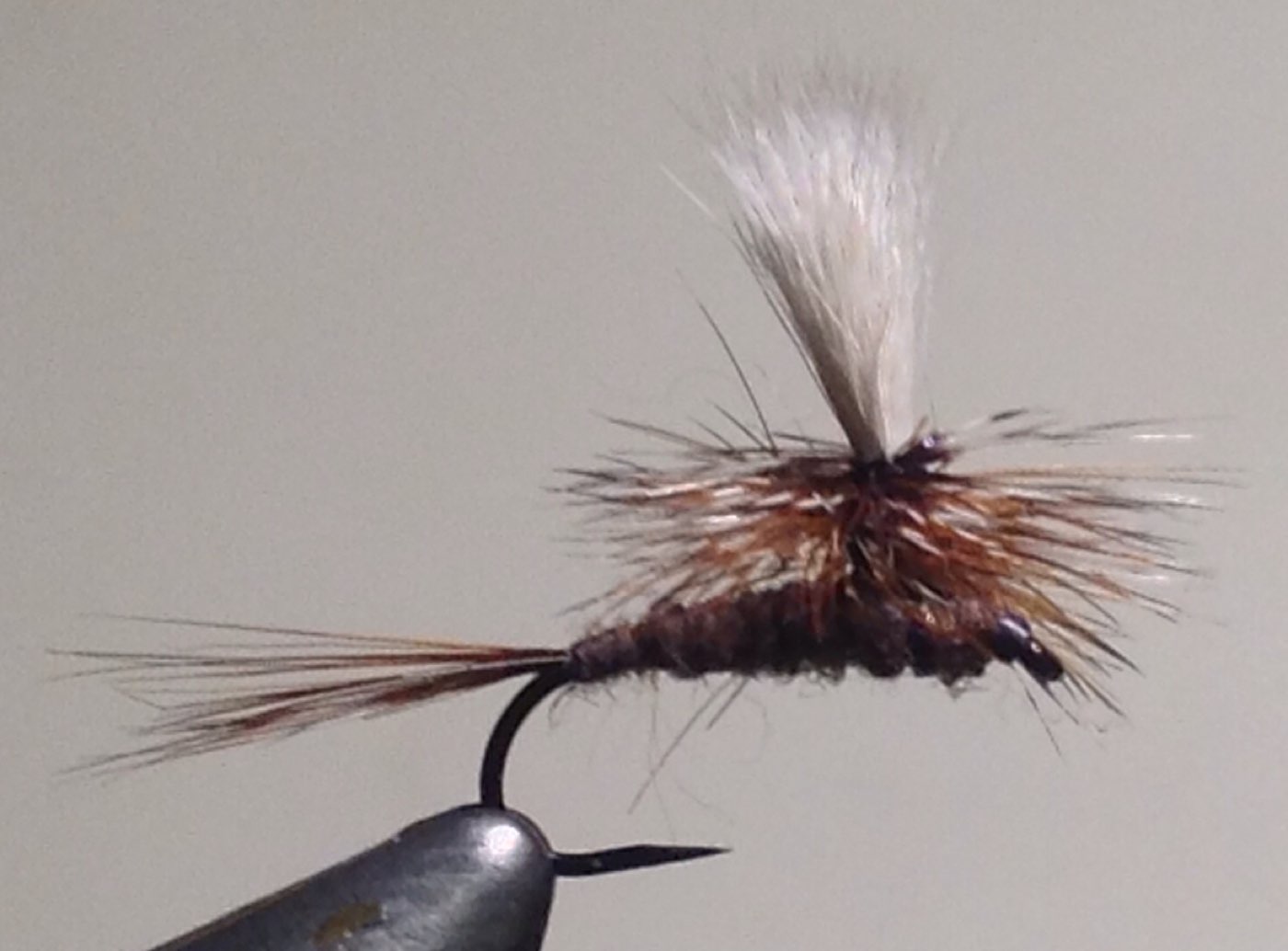
Materials
- Hook: Tiemco TMC 100, sizes 12–20 — Standard dry-fly hook, down-eye
- Thread: UNI 8/0, gray or black
- Tail: Grizzly hackle fibers
- Body: Adams gray dubbing or muskrat fur
- Wing post: White calf body hair, polypropylene yarn, or Antron
- Hackle: One grizzly + one brown, parachute-style around the post
Tying steps
-
Mount the hook in the vise. Start the thread two eye-lengths back from the eye and wrap a smooth base back to the bend.
-
Tie in 6–10 grizzly hackle fibers for the tail, length about one shank long. Wrap forward to the 1/3 point from the eye.
-
Tie in the wing post material upright at the 1/3 point. Use a pinch of calf body hair, a 1-inch tuft of poly yarn, or a section of Antron — pick one and stay consistent across batches. Wrap thread up the base of the post for 8–10 turns to lock it vertical.
-
Apply a thin layer of Adams gray dubbing to the thread. Keep the dubbing tight and tapered — bulky bodies kill the silhouette.
-
Wrap the dubbed body forward, building a slight taper from tail to wing post. Stop just behind the post.
-
Tie in two hackles, one grizzly and one brown, by the stem at the base of the post. Strip the lower fibers off the first 1/8 inch so the stem mounts cleanly.
-
Wrap both hackles together up the post, 3–4 turns each, then bring the thread up to lock them at the top of the wraps.
-
Bring the hackles back down through the parachute wraps, secure with two thread wraps at the base, then trim the excess.
-
Build a small thread head behind the eye. Whip-finish, careful not to trap parachute fibers.
-
Coat the head with a drop of head cement or UV resin. Skip varnishing the parachute hackle — it kills the high-floating geometry.
Notes
The default mayfly imitator from size 12 to size 20. Tied correctly, the parachute post sits the fly low in the film with the hackle as a horizontal trigger — closer to the silhouette of an emerging dun than a high-riding Catskill-style Adams. Carry sizes 14, 16, and 18 in every fly box.
Where this fly works
- Kenai River
- Lower Sacramento River
- Frying Pan River
- South Platte River (Cheesman, Deckers, Dream Stream)
- White Clay Creek
- Chattahoochee River (Buford Dam)
- South Fork of the Snake River
- Swift River
- Big Hunting Creek
- Au Sable River
- Gallatin River
- Madison River
- Missouri River
- Smith River
- Yellowstone River
- Davidson River
- Upper Delaware River
- Mad River
- Lower Mountain Fork River
- Deschutes River (Lower)
- Penns Creek
- Chattooga River
- Green River (below Flaming Gorge Dam)
- Battenkill River
- Bois Brule River