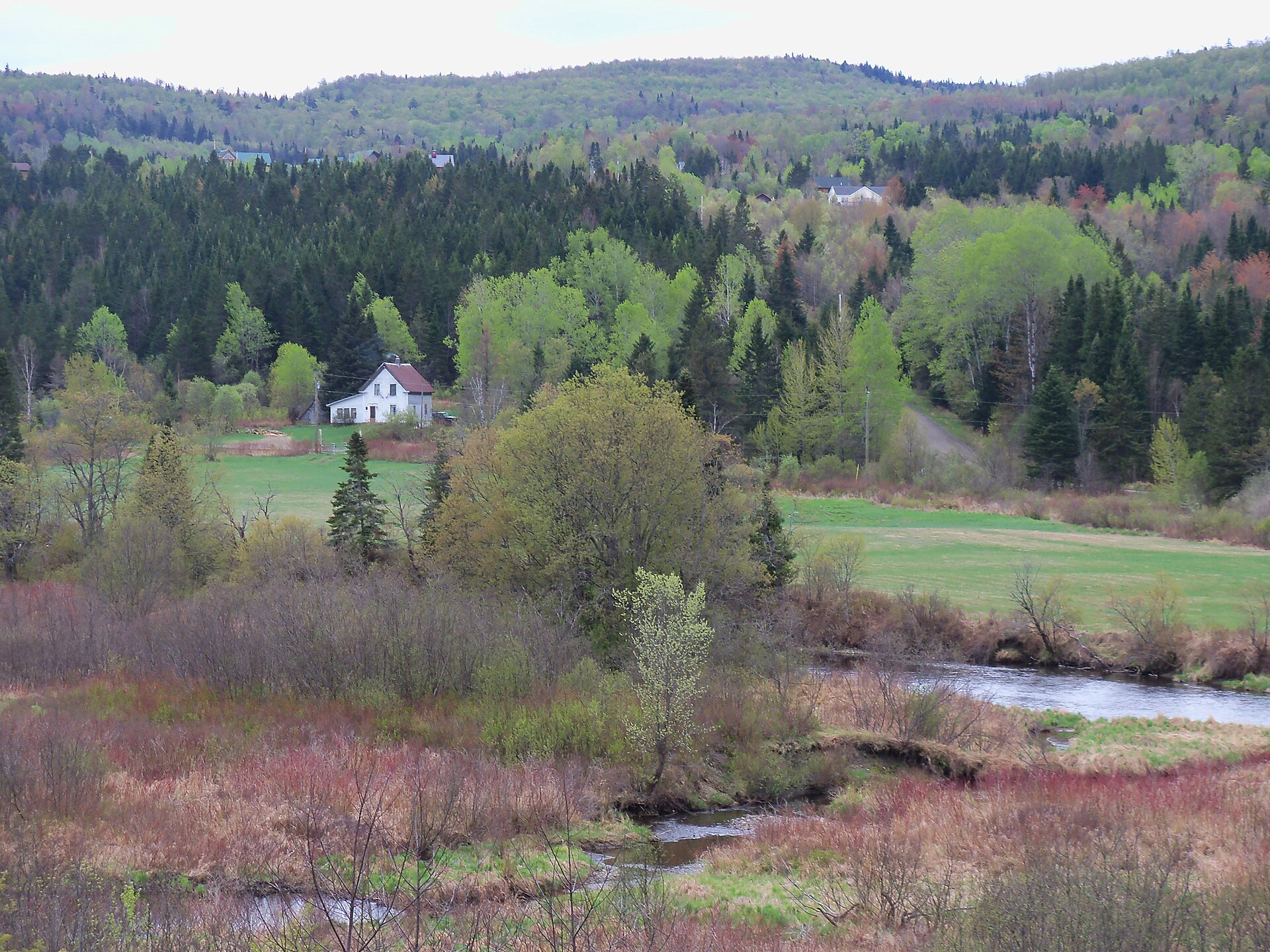
Quick reference
| Field | Value |
|---|---|
| State / region | New Hampshire, Great North Woods — Pittsburg, near the Canadian border |
| Species | Brook trout, brown trout, rainbow trout, landlocked salmon |
| Best months | Late April–June, September–October |
| Water type | Cold tailwater below First Connecticut Lake Dam |
| Difficulty | Intermediate — technical at times, but consistent flows and dense fish forgive mistakes |
| Wading | Primary method; rocky and bouldery, chest waders with felt or cleats strongly advised |
Why fish here
The Trophy Stretch of the Upper Connecticut is 2.5 miles of cold tailwater running from First Connecticut Lake Dam down to Lake Francis in Pittsburg, and it packs more quality fishing into that short reach than most rivers manage in twenty. Dam releases keep the water cold and oxygen-rich through the season, and the reach is managed as fly-fishing-only with size limits that concentrate quality fish. The result is a rare combination: trophy-class potential and consistent day-in, day-out action, supported by year-round cold flows and regular stocking on top of wild fish.
Four species share the water — brown, rainbow, and brook trout plus landlocked salmon — and the reach is widely regarded as one of New Hampshire's premier tailwaters, with brown trout fishing highlighted as among the best in the state. Early season brings strong nymph and streamer fishing as fish key on smelt washing out of the lake system; from late spring into fall, reliable mayfly and caddis hatches produce genuine dry-fly water.
Access seals the case. Despite the remote Great North Woods setting, a railroad-grade dirt road parallels the river for its full length, so every pool and pocket from the dam to the Lake Francis inlet is a walk away from one parking area. Few destination fisheries in the Northeast are this easy to cover on foot.
The river, section by section
Dam to the upper pools
Access: Gravel road off Route 3 about one mile south of Lopstick Lodge leads to a small parking area near the dam outlet; the railroad-grade road and footpaths take it from there. Character: Moderately wide with noticeable gradient — fast pocket water, bouldery runs, deep plunge pools; at around 150 cfs wading is fairly easy, but felt soles (often cleats) are the rule near the dam. Species mix: All four species, with many of the larger browns and salmon holding in the deep dam-proximate pools and faster runs. Crowding: The most popular water on the stretch; from Memorial Day through early July the upper pools are often claimed by 7 a.m. Notable hatches: Tan and olive caddis May through early fall, Cahills and mid-season mayflies, BWOs on cool overcast days, terrestrials in summer; stoneflies and smelt patterns matter early near the dam.
This is classic tailwater structure — riffle-run-pool sequences over rocky substrate, with defined slots and seams that reward nymphing and swung soft hackles. Because flows are controlled, the water is readable and consistent in a way freestone rivers rarely are, and the deep pools directly below the dam hold the reach's biggest fish.
The trade-off is pressure. This is where everyone starts, and on peak weekends the best pools go early. Arriving before 7 a.m. is standard practice from Memorial Day through early July; weekdays and the shoulder seasons of early June and September–October fish with far less company, though the reach rarely feels empty.
Mid-stretch pocket water
Access: Informal footpaths branch off the railroad-grade road between the dam and Lake Francis; most anglers park near the dam and work down pool to pool. Character: Moderate-gradient riffles, long bouldery runs, and classic pocket water broken by deeper pools over gravel and cobble; manageable wading at moderate flows with careful footing. Species mix: The same four-species mix distributed through runs and pockets, with the brown trout fishing a particular strength. Crowding: Lighter than the dam pools, though June and early-July weekends still see anglers spread down the grade; September and October weekdays offer plenty of open water. Notable hatches: Caddis and mayflies (PMDs, Cahills) steady from late spring through early fall; BWOs and midges increasingly important late; attractor dries and terrestrials take fish in summer pockets.
The middle of the Trophy Stretch is where the walking pays off. The pocket water here suits prospecting tactics — a Stimulator or hopper bounced through the seams, a soft hackle swung across the tailouts — and fish are distributed through the runs rather than stacked in a few famous pools.
Chest waders are strongly preferred over hip boots through this water; the bed is rocky enough that route-finding matters, and the extra margin lets you position for drifts that bank-bound anglers can't reach.
Lower stretch to the Lake Francis inlet
Access: The railroad-grade road continues all the way to the Lake Francis inlet, with footpaths dropping to pools and runs; access is by walking down from the dam parking area. Character: Gradient eases and pools lengthen toward the inlet, still mixing riffles and runs over gravel and boulders, with a transitional lake-inlet feel in the lowest water. Species mix: Browns, rainbows, and brook trout throughout, with landlocked salmon concentrated near the inlet during movements between lake and river; fresh fish enter from Lake Francis on rising flows. Crowding: The most solitude on the stretch — many anglers never walk the full 2.5 miles. Notable hatches: Caddis, PMDs, Cahills, Sulphurs, and BWOs through the season, with evening caddis often the productive window; streamers and nymphs excel around flow changes.
The lower river is the movement water. Salmon and trout slide between Lake Francis and the river, and flow changes can push fresh fish into the long pools near the inlet with no warning beyond a rising gauge. When that happens, streamers and heavy nymph rigs outfish everything else.
Because most anglers stop well short of the inlet, this is the reach for weekday solitude even in prime season. The fishing is less predictable than the dam pools — some days the lower water is quiet — but the ceiling is high when migratory fish are in.
Hatches and seasons
| Months | Hatches | Flies |
|---|---|---|
| Mar–Apr | Early stoneflies, midges, early BWOs, occasional caddis toward April | Beadhead Pheasant Tail 14–18, Beadhead Prince 12–16, black/yellow stonefly nymphs 10–12, Copper John 14–16, Zebra Midge 18–22 |
| May–Jun | Tan and olive caddis, Cahills, PMDs, early Sulphurs, midges and BWOs | Elk Hair Caddis tan/olive 14–16, Cahill dry 14–18, PMD dry 14–16, Sulphur Comparadun 16–18, Beadhead Caddis Pupa 12–16, Sparkle Pupa 14–16, Partridge & Orange soft hackle 12–14 |
| Jul–Aug | Continuing caddis, evening mayflies, terrestrials, strong midge activity | Stimulator 8–10, ants/beetles/hoppers 12–16, CDC emergers 16–18, small BWO emergers 18–20, soft hackle wets 12–14, San Juan Worm subsurface |
| Sep–Oct | BWOs and midges, residual caddis, sporadic late mayflies; streamer season strengthens | BWO dries 18–20, midge nymphs 18–22, LaFontaine Sparkle Pupa 14–16, Woolly Bugger 6–10, Grey Ghost and smelt streamers, articulated patterns (Zoo Cougar, Drunk and Disorderly) |
Recommended flies (by season)
| Season | Top patterns | Why |
|---|---|---|
| Spring | Smelt streamers (Grey Ghost variants), Beadhead Pheasant Tail, Prince, stonefly nymphs, Copper John, Zebra Midge, caddis pupa | Early-season trout and salmon key on smelt and large nymphs drifting out of the lake system; cold water holds fish deep, so streamers and weighted nymphs do the work |
| Summer | Elk Hair Caddis, PMD and Cahill dries, Stimulators, terrestrials, soft hackles, small midges and BWO emergers | Strong caddis and mayfly hatches plus bank terrestrials make dries and soft hackles the play in riffles and pockets, with small nymphs filling the non-hatch hours |
| Fall | BWO and midge dries/emergers, Sparkle Pupa, Hare's Ear and Pheasant Tail nymphs, Woolly Buggers and articulated streamers | Cooling water and shifting flows put trout and salmon on the move and feeding hard; small mayflies cover the hatch side while streamers target pre-spawn and migratory fish |
Gear notes
An 8½–9 foot rod in the 4–6 weight range covers the Trophy Stretch — a 4 or 5-weight for dries, a 5 or 6-weight for nymphs and streamers. A floating line handles most situations, with an intermediate or sinking line worth carrying for heavy streamer work in the deep pools. Run standard 8–9 foot leaders to 4X, with 4X–5X tippet for most fishing and 6X for fussy fish on small flies. Chest waders are strongly recommended over the rocky, bouldery bed, and felt soles or cleats are advised — the rocks near the dam run slick. Nymph anglers typically fish indicators, split shot, and double-nymph rigs to reach fish in the deep slots.
Logistics
- Regulations: The Trophy Stretch is fly-fishing-only from the First Connecticut Lake Dam outlet to the Lake Francis inlet, with a two-fish daily aggregate limit — 12-inch minimum for trout, 15-inch minimum for landlocked salmon. The general river season runs January 1 through October 15. New Hampshire Fish and Game manages the fishery; a standard NH license is required, with no additional stamp indicated. Regulations change annually — confirm current rules before fishing.
- Access points:
- First Connecticut Lake Dam parking area — small gravel lot near the dam outlet, via a gravel road off Route 3 about one mile south of Lopstick Lodge; the primary trailhead for the railroad-grade road along the full stretch
- Closest fly shop: Tall Timber Lodge fly shop and Lopstick fly shop, both in Pittsburg
- Nearest towns: Pittsburg, Clarksville, Colebrook
- Closest gauge: USGS 01129200 — Connecticut River below Indian Stream, near Pittsburg, NH
When NOT to fish here
High runoff or elevated dam releases make the bouldery wading difficult and put many holding lies out of reach — watch the gauge and skip the river when releases spike. On unusually hot midsummer afternoons surface action slows even in this cold tailwater; fish mornings and evenings or go deep with nymphs instead. And plan around the crowds: from Memorial Day through early July, holiday weekends put heavy pressure on the upper pools from first light, so either arrive very early, walk well downstream, or come midweek.
Where to fish next
- Fly Fishing in New Hampshire — the full state guide
- Connecticut River below Murphy Dam — the next tailwater down the chain, below Lake Francis, extending the same cold-water fishery
- Indian Stream near Pittsburg — a smaller nearby option when the main river is crowded or running high