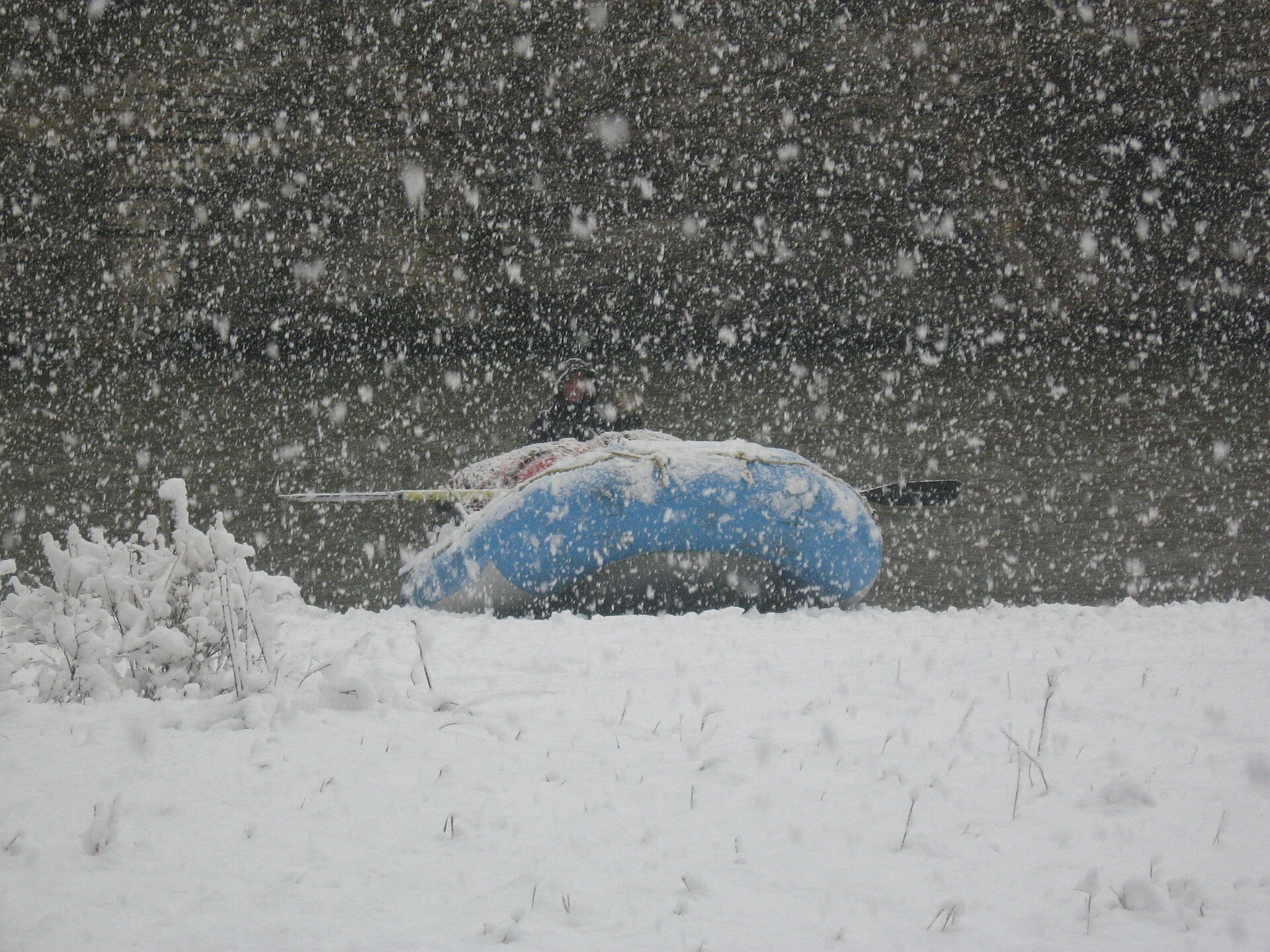
The Smith River doesn't give you a day trip. The 59-mile float through Smith River State Park runs through a limestone canyon with no road access from Camp Baker to Eden Bridge—once you're in, you're in for four to five days. Montana Fish, Wildlife & Parks manages the float through a competitive permit lottery. Getting a permit is harder than catching a fish once you have one.
That friction is the point. The Smith's canyon holds brown trout and rainbow trout in water that sees less pressure per surface mile than almost any fishery in the American West. The limestone geology produces exceptional invertebrate life. The canyon walls—some rising 1,000 feet straight from the river—eliminate bank erosion and maintain the clarity that makes the Smith's dry fly fishing exceptional from late May through June and again in September and October.
The permit protects the experience. If you're planning around the Smith, plan 12–18 months out. The lottery opens in January; results come in March. Slots fill through the outfitter allocation system if you're going guided. Either way, this river requires advance commitment.
The permit system
Montana FWP manages Smith River access through a permit lottery with a defined season (late May through mid-July for the primary window, with a smaller fall window). Here's how it works:
Lottery timeline:
- Applications open in January (typically the first week)
- Draw results announced in March
- Undrawn permits released via first-come, first-served in early spring
What a permit covers: One launch date from Camp Baker. Permits are issued by party size (up to a defined group maximum). Each permit holder is responsible for a reservation fee paid at time of draw.
Outfitter allocation: Licensed outfitters receive a separate allocation of permits. If you're booking a guided trip, the outfitter holds the permit—you don't need to win the lottery yourself. Outfitter slots for peak season (late May–June) book 1–2 years out.
Current permit details and application: Montana FWP Smith River
The fall window (September–October) is less competitive than the spring lottery and produces excellent fishing with fewer parties on the water.
When to fish
Late May – June: The primary window. Runoff from the Little Belt Mountains peaks in early May and drops into fishable flows by late May most years. Golden stonefly and salmonfly hatches come off as the river drops. Caddis hatches follow. This is the period most guided outfitters build their season around—longer days, active fish, and the canyon at its most dramatic with spring snowmelt still on the rims.
July: Flows drop and warm. The Smith can push into marginal temperatures in mid-summer during hot years; FWP monitors and can close the river to fishing above certain temp thresholds. Early July can still fish well; late July is less reliable.
September – October: The fall window. Lower competition for permits, cooler temps, active browns pre-spawn. PMD and BWO hatches come off. Streamers produce well in September and October for the largest fish in the system. Hunting season opens in October, which adds logistical complexity if you're camping.
Avoid: June during peak runoff (visibility drops to inches and the river is dangerously high). FWP posts flow and visibility advisories.
What to fish
The Smith rewards matching the hatch in spring and covers attractor patterns well in the canyon's faster pocket water:
- Golden stonefly dries (6–8): Stimulator, Kaufmann's Stone — late May through mid-June
- Salmonfly dries (4–6): Chubby Chernobyl, Foam Salmonfly — late May
- Caddis dries (14–16): Elk Hair Caddis, X-Caddis — June through early July
- PMD dries (16–18): Sparkle Dun, PMD Cripple — September
- BWO dries (18–20): Comparadun, CDC Dun — fall afternoons
- Hoppers (8–12): Dave's Hopper, Chubby Chernobyl — July–August (lower flows)
- Nymphs (14–18): Frenchie, Pat's Rubber Legs, Hot Spot Pheasant Tail — year-round subsurface
- Streamers (4–6): Sculpzilla, Lunch Money, articulated patterns — fall pre-spawn browns
Pack more than you think you need. You're five days from a fly shop.
How to fish it
The Smith float is drift-boat or raft primary. The canyon has no trails or road access—there's no wading in without a boat unless you're at one of the designated campsites. The float itself is Class I–II with a handful of Class III rapids (most notably Eden, which guides scout before running); it's not technical whitewater, but a swamped boat loses your gear for the week.
From the boat: Fish the banks and seams from the boat in the canyon's faster sections. The Smith's limestone walls create undercut banks that hold fish. Guide boats run the banks with an attractor dry and a dropper nymph through the faster pocket water. The fish in the canyon pockets are less selective than the fish in the flat pools.
Camp fishing: Each night's camp is a fixed location, and the pools near camp are often the best water. Get up before your camp mates. The flat pools adjacent to camps fish like spring creeks during the morning PMD and midge activity—use fine tippet (5X–6X), approach carefully, and make precise presentations. Browns in the 18–22-inch range hold in these pools and have seen pressure from every party that camped there before you.
Streamer approach: In fall, run articulated streamers along the undercut walls in the canyon's deeper runs. The browns in September are moving pre-spawn and will chase. Swing the fly into the shadow at the base of the limestone walls.
Gear considerations: Everything lives in dry bags for five days. A good waterproof system isn't optional. The Smith's campsites are established but primitive; FWP requires packing out all waste (groover system). Experienced guides handle all logistics; DIY floaters need to research regulations for camping, campfires, and waste management at fwp.mt.gov.
Bring Simms G3 Guide Stockingfoot Waders — you'll wade the camp pools every evening and morning. A Fishpond Nomad Mid-Length Net is right for the fish sizes you'll encounter.
Access
The Smith River float has two fixed points:
- Camp Baker (put-in) — 29 miles north of White Sulphur Springs via US-360 and Camp Baker Road. Paved access to the launch site; FWP day-use area with parking. Coordinates: ~46.774°N, 110.748°W
- Eden Bridge (take-out) — 67 miles north of Great Falls near Ulm. Coordinates: ~47.319°N, 111.069°W
No road access exists between these two points. The canyon is Smith River State Park. Parties are assigned designated campsites in sequence along the float; camping outside designated sites is prohibited.
Shuttle logistics: guided outfitters handle shuttles. DIY floaters need to arrange vehicle shuttles between Camp Baker and Eden Bridge—a 2.5-hour drive. Several White Sulphur Springs-area businesses offer shuttle services.
Regulations
- Montana fishing license required
- Smith River State Park permit required for all floating parties (lottery or outfitter allocation)
- The float season runs late May through mid-July (primary window) and a fall window in September–October; exact dates set by FWP annually
- Catch-and-release regulations apply to brown trout in certain sections — check current Montana FWP regulations before your trip
- Campfire regulations vary by season and fire danger — confirm before you go; the canyon's isolation makes a wildfire extremely difficult to manage
- Pack-out waste requirement for all parties; FWP provides detailed guidance at permit issuance
Where to base
White Sulphur Springs, MT — The primary staging town, 29 miles south of Camp Baker. Population ~900. Has lodging (a few motels and the Spa Hot Springs Motel), restaurants, a small grocery, and gas. Most guided trips stage from here the night before launch.
Great Falls, MT — 90 miles from Eden Bridge, the closest city to the take-out. Commercial airport (GTF), full amenities. A reasonable destination post-float before flying home.
Helena, MT — 90 miles from White Sulphur Springs via US-12/89. Commercial airport (HLN), better dining and lodging selection than White Sulphur Springs, worth building into a broader Montana trip.
Guides and shops
Anderson's Yellowstone Angler (White Sulphur Springs area) — Smith River specialists with outfitter permit allocations. Smith float-specific experience matters; look for guides who run this river every season.
Streamside Anglers (White Sulphur Springs) — Local guide services with Smith River expertise.
Great Falls fly shops — Montana Fly Goods and similar Great Falls shops can direct you to permitted outfitters and handle gear if you're arriving by air to GTF.
Guided Smith River trips run $400–$700 per person per day all-inclusive (gear, food, camping, boat, permit) depending on group size and outfitter. It's not cheap. It's also the most logistically complete way to do the river if you're not an experienced multi-day float angler.
What to bring
The Smith is a multi-day wilderness float. The packing list is longer than a day-trip river:
- Montana fishing license
- Smith River State Park permit confirmation
- Dry bags for all gear — assume the boat will get wet
- 5 days of food and water filtration (guided trips provide; DIY must plan this in full)
- Waders and Simms G3 Guide Stockingfoot Waders for camp pool fishing
- Rod tube — protect your rods in the boat; a broken rod on day two is a five-day problem
- Leaders and tippet for both dry fly (5X–6X) and streamer (3X–4X) setups; bring extras
- Stonefly, salmonfly, and caddis dries if fishing spring; PMD, BWO, streamer box for fall
- Sun protection — the canyon walls block morning and evening sun but the midday exposure on the water is intense
- Layering system — nights in the canyon drop below 40°F even in June
- First aid kit and any prescription medications for the full duration
Closest gauge
Monitor conditions at USGS gauge 06077500 — Smith River near Fort Logan. This gauge sits upstream of the float and gives the best indication of current flows and visibility. Prime fishing flows run 300–800 cfs. Above 1,200 cfs, visibility drops and floating becomes more challenging; FWP posts advisories when conditions deteriorate. The gauge is also available on the FWP Smith River page.
Where to fish next
After five days in a limestone canyon, you'll either want a day off or a completely different fishing format:
- Missouri River, Montana — tailwater precision if you want to stay technical; accessible day-trip format after the Smith's logistics
- Madison River, Montana — roadside freestone with constant wade access; the antidote to five days without a road
- Bighorn River, Montana — another permit-required fishery, but day-trip format with a local outfitter