A dry fly drags when the water under the fly line and leader moves at a different speed than the water the fly itself is riding on, and it beats fly selection as the reason a good pattern gets refused. Reach casts and the wiggle cast prevent drag before the fly lands; upstream, downstream, and stack mends correct it after; and on water broken into too many current lanes, shortening the drift beats trying to mend a bad one from too far away. The single most common error is mending late, after the fly has already skated a few inches and told the fish something is wrong.
What drag actually is
A dry fly drags when the current under the fly line and leader moves at a different speed than the current directly under the fly. Cast across a seam and the belly of line sitting in faster water pulls ahead of the fly, or slack sitting in slower water lags behind it. Either way the leader tightens and tows the fly sideways, or skates it across the surface faster than the water beneath it is moving. The fly stops looking like an insect riding the current and starts looking like an insect being dragged across it, which is the one thing a natural bug never does. Drag inside the first three feet of a drift is easy for an angler to miss. It is not easy for the fish to miss.
When to use it
Reach for active line control, the reach cast, mends, the wiggle cast, any time a floating line has to cross two or more current speeds to reach a feeding fish. That covers most technical dry fly water in the Mid-Atlantic: a riffle dumping into a slick pool on the Gunpowder, a foam seam cutting across variable current on Penns Creek, any limestone spring creek where the fly rides in one lane and the rod tip sits in another.
September and October add urgency. Blue-winged olives return to both Pennsylvania and Maryland trout water through the fall, tricos are still finishing morning spinner falls into mid-September on Pennsylvania limestone, and slate drakes run afternoon hatches into September on both states' rivers. Fish that have seen a season of pressure on these small flies refuse a dragging fly on sight, and a size 20 BWO parachute gives almost no forgiveness for the mistake.
When to fish something else
Skip the mend on short, single-current drifts under about 15 feet. A slack cast alone beats a mend you didn't need, and every mend risks moving a fly that was already drifting clean. In pocket water with several seams inside a rod's length, high-stick nymphing or a high-stick dry fly presentation keeps line off the water entirely and makes the mending question moot. And when a drift is too complex to fix, three or four current lanes stacked across 25 feet, the better call is usually to wade closer and shorten the cast rather than layer mend on top of mend hoping one lands right.
What you need
- A floating line matched to your rod weight. A 9-foot 4- or 5-weight rod gives more leverage to mend line without moving the rod tip over the fish than a shorter rod does.
- A tapered leader, 9 feet for open runs, out to 12 feet for flat, technical tailwater pools, in 4X to 6X depending on fly size.
- Tippet one size finer than the leader tip for small fall flies: 5X for a size 18 BWO, 6X for a size 22 trico or midge.
- A rod tip you can track by eye. Mending accurately means watching the rod tip's position relative to the line belly, not just the fly.
- No new gear beyond what you already carry for dry fly fishing. This is a casting and line-control skill, not an equipment upgrade.
The technique, step by step
Step 1: Read the current before the cast
Look at the water between your position and the target lane before you false-cast. Find the seam, the visible line where foam, current speed, or surface texture changes, and note which side is faster: between you and the fly, or beyond the fly toward the far bank. That single read determines every choice that follows. Anglers who skip this step end up guessing which way to mend after drag has already started, which is late by definition.
Step 2: Throw a reach cast when you can predict the seam
On the forward casting stroke, as the loop unrolls but before it straightens over the water, tip the rod upstream (for fast water between you and the fly) or downstream (for fast water beyond the fly) and stop it there. The line follows the rod tip and lands already bent in that direction, with slack built in before the fly touches down. Done right, you should see the leader land in a soft curve with the fly at the front of it, not a straight line. The common error is reaching too late, after the loop has already unrolled flat over the water. At that point tipping the rod just drags the whole system sideways instead of pre-positioning it.
Step 3: Mend upstream when fast water sits between you and the fly
This is the default correction on a run where you're standing in slow water and the fly drifts in a faster lane downstream of you. The moment the line lands, lift the rod tip and roll the wrist to flip the belly of the line upstream of the fly, a compact flick, not a second cast. You should see 8 to 12 feet of line relocate upstream while the fly barely twitches in place. If the fly jumps or skates when you mend, you moved too much line too fast, or the flick traveled far enough to move the leader.
Step 4: Mend downstream when fast water sits beyond the fly
This is the mend anglers forget. If the fly rides in slow water near the far bank and the fastest current is the lane between you and the fly, an upstream mend makes drag worse: it throws slack into the fast lane, and the current immediately eats that slack and uses it to accelerate the pull on the fly. Flip the line belly downstream instead, with the same wrist-roll motion. The slower water near the fly then feeds that slack out gradually rather than the fast lane consuming it at once.
Step 5: Stack mend to stretch a drift past what one mend can cover
On a long, uniform seam, 20 feet or more, a single mend thrown at the moment of the cast runs out partway through the drift. Stack mending adds a second, and sometimes a third, small upstream mend on top of the first as the belly starts to reform, each one smaller than the last and aimed at the same spot in the line, not the leader. You should see the leader-to-line connection stay roughly in the same place on the water through the whole drift while the fly keeps moving with the current, uninterrupted. The error here is one big correction late instead of two or three small ones early; a big mend late in the drift disturbs more water and more often moves the fly.
Step 6: Use the wiggle cast where current lanes are too broken to mend
On water with three or more seams inside casting range, braided banks, boulder gardens, tailouts breaking into multiple tongues, neither the reach cast nor a mend can track all of it. On the forward stroke, check the rod tip abruptly partway through the power stroke. The sudden stop sends a shock wave down the line that lands as a series of S-curves in the leader and tippet, and the fly comes down with slack coiled in front of it. The current has to work through that slack, lane by lane, before it can pull the fly. Accuracy suffers: a wiggle cast rarely lands within an inch of a target the way a straight cast does, so use it where drift length matters more than pinpoint placement.
Step 7: Feed line by hand when the drift outruns your rod's reach
Once the fly has traveled far enough that a mend from the rod tip can no longer reach the belly, often past 30 to 40 feet, strip slack from the reel or hold loose coils in your line hand and feed them through the guides as the current pulls the fly away. You should see the coils pay out smoothly, a foot or two at a time, with no tug transmitted to the leader. Feed too fast and you pile slack you can't pick up in time to set the hook. Feed too slow and you're right back to mending, except now you're out of line to work with.
Step 8: Know when to shorten the drift instead of fighting it
Some water isn't worth mending. If you count four or more distinct current seams between you and a rising fish, or the cast is already pushing 50 feet, the odds of stacking enough correct mends in sequence drop fast, and every mend is another chance to move the fly. Wade closer, change your angle to the fish, or pick a shorter presentation lane instead of layering more technique onto a cast that was wrong from the start. The best mend is often the one you don't need because you positioned yourself better before the cast.
Common mistakes
Mending too late
Drag typically starts within one to three seconds of the fly landing. A mend thrown after that has already let the fly move once; the correction resets the line but not the fish's first look. Mend the instant the line lands, or build the correction into the cast itself with a reach cast.
Moving the fly on the mend
The mend should stop at the leader. If the rod-tip flick travels far enough to move the leader or the fly, you've replaced natural drag with mend-induced drag, which looks just as wrong to a fish. Keep the motion compact and aimed at the line belly only.
Too much slack to set the hook
A wiggle cast or a big stack mend can leave so much slack on the water that a strike goes unfelt, or the hookset has to travel through several feet of loose line before it reaches the fish. Match the amount of slack to the length of drift you actually need. More is not automatically better.
Fishing across too many seams
Casting to a fish sitting behind three or four current lanes asks one mend, or even three, to do a job it can't do reliably. Reposition for a shorter, simpler current path before defaulting to more line control.
Mending in the wrong direction
Upstream when the problem calls for downstream, or the reverse, actively worsens drag instead of fixing it. Read which side of the fly carries the faster current before deciding which way to flip the line.
Watching the fly instead of the water
Anglers track the fly and react to visible drag, by which point the fly has already skated. Watching the seam and the line belly, not just the fly, catches the moment drag is about to start instead of the moment it already has.
Flies that fit this technique
A drag-free drift is wasted on a fly the fish can't identify at a glance, so match the pattern to what's actually hatching.
- Parachute Adams: the general searching pattern for blue-winged olives and mixed mayfly hatches, sizes 16 to 20 through the fall return hatch.
- Sparkle Dun: a low-riding emerger silhouette for BWOs and other duns fish are keying on just under the surface film.
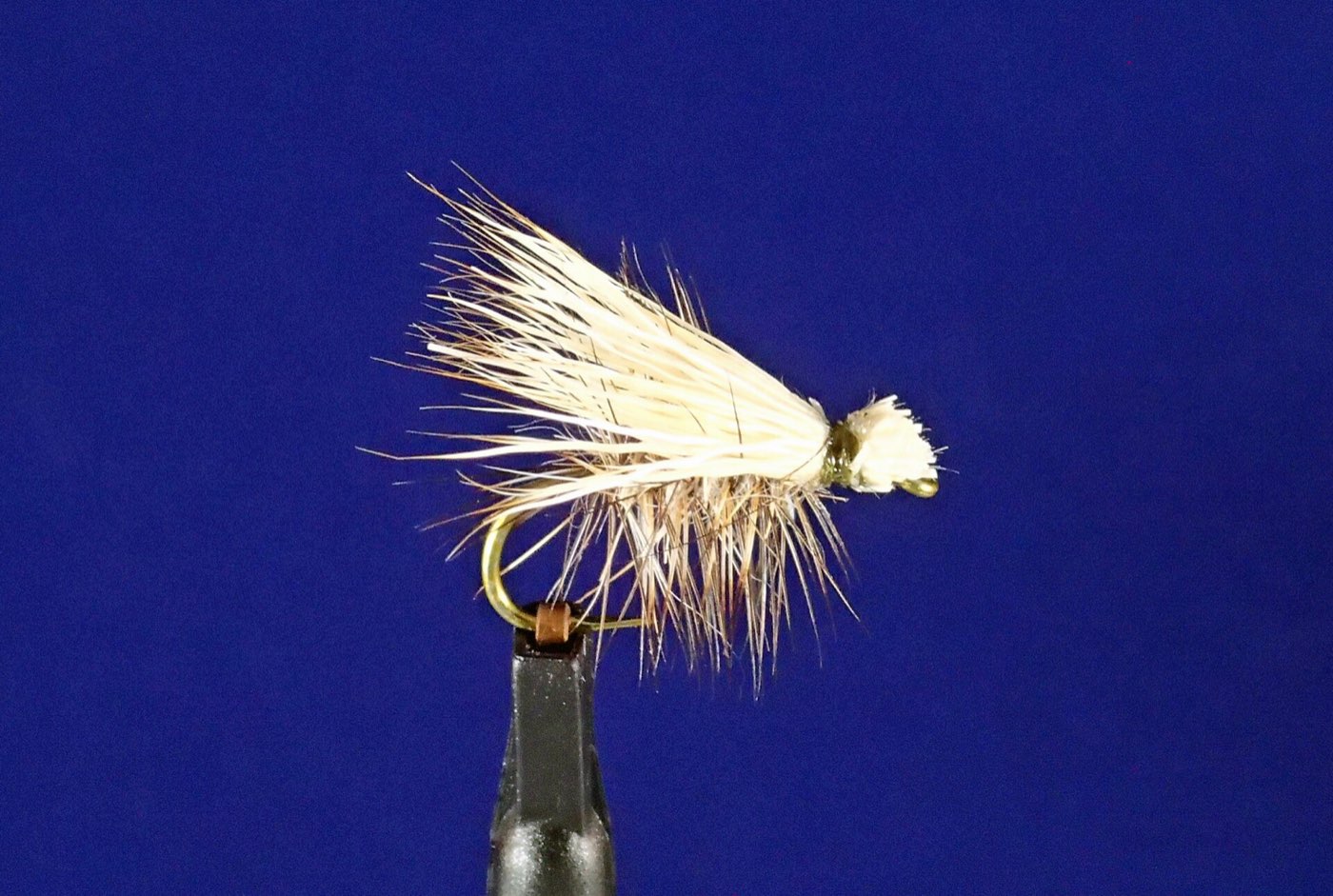
- Elk Hair Caddis: the caddis pattern for the tan and cinnamon caddis still active into early fall on Mid-Atlantic freestones and tailwaters.
- Griffith's Gnat: a midge cluster pattern for the small, technical rise you'll see as tricos wind down and midges pick up in cooling water.
Questions people ask
What is drag in fly fishing?
Drag is the unnatural movement of a floating fly caused by the fly line or leader moving at a different speed than the water the fly is riding on. It shows up as the fly skating, towing a visible wake, or pulling sideways across the current.
When should I mend upstream versus downstream?
Mend upstream when the fastest current is between you and the fly. Mend downstream when the fastest current is beyond the fly, closer to the far bank or the slower water where the fly is riding.
Is the reach cast better than mending?
When you can predict the current differential before the cast, yes, because it positions the line correctly the moment the fly lands instead of correcting it afterward. Mending is still necessary when the cast is already in the air or the water changes mid-drift.
How long should a drag-free drift last?
As long as the seam stays consistent, which on Mid-Atlantic runs is often 10 to 20 feet before you need a second mend. Trying to stretch a single mend across 30 feet of broken current usually fails. Shortening the drift or repositioning works better than adding more line control.
Related reading
- Matching the hatch for picking the right fly before the drift matters at all.
- Reading water for fly fishing for identifying the seams this technique corrects for.
- Essential fly fishing knots for the leader-to-tippet connections that hold up under repeated mending.
- Pennsylvania hatch chart for the fall BWO, trico, and slate drake windows this technique is built around.
- Penns Creek, Pennsylvania fly fishing guide for water where long, technical drifts are the rule, not the exception.
Updated September 13, 2026.